

What do owners learn after the first week of dog heat diapers?

After the first week of dog heat diapers, most owners learn that fit and change timing matter more than the diaper itself. The diaper catches discharge, but the notes from the week tell you when to adjust the routine.
The first week is usually less about buying the perfect item and more about noticing patterns. Morning discharge may look different from evening discharge. A diaper that stayed put on Monday may twist during play on Wednesday. A liner that works for light staining may need to be changed sooner after a nap.
Think of the first week as field notes, not a pass-fail test. Each day gives one small clue about fit, timing, laundry, or breaks, and those clues become the routine.
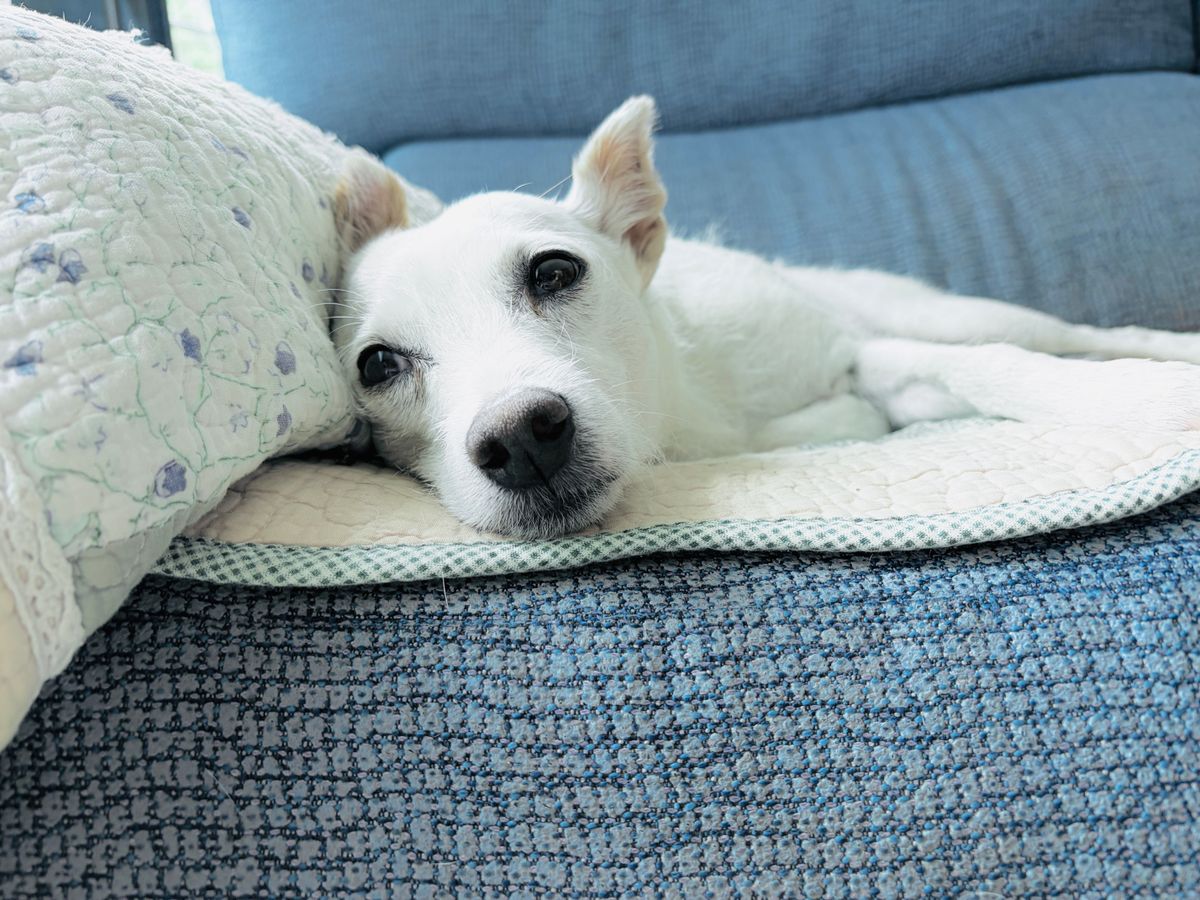
Field note, day one: the first stain feels bigger than it is
Day one feels confusing because owners are trying to protect the home while learning what their dog's heat cycle actually looks like. The first stain can make everything feel urgent.
Cornell explains that a dog's heat cycle has stages, and that bloody vaginal discharge is one notable sign owners may see. VCA adds that discharge can change in color and appearance as the cycle progresses. That means day one is not enough information to predict the whole cycle.
Write down what you notice: when discharge appears, whether she licks more, whether the diaper slips, and how long the inside layer stays dry. This is not medical tracking. It is household management. If something looks abnormal or your dog seems unwell, bring that note to your veterinarian.
Field note, day two: fit changes when she moves
By day two, owners usually notice that a heat diaper has to fit when the dog sits, walks, curls up, and gets excited. Standing still is the easiest test and the least useful one.
Check the tail hole, leg openings, and belly closure after movement. A small gap can leak. A bunched edge can rub. A diaper that looks neat from the side may still pull at the tail when she curls on the couch.
A dog diaper liner is a replaceable absorbent insert that attaches inside the diaper; PAWPANG makes adhesive dog diaper liners that work as the inner layer while the outer diaper provides the fit. That separation is useful in week one because you can adjust the diaper without throwing the whole system away.
What changes once discharge becomes routine
Once discharge becomes part of the routine, owners stop treating every spot as a surprise and start building check points into the day. The mess becomes less dramatic when the next step is obvious.
| First-week moment | Common lesson | Better habit |
|---|---|---|
| Morning wake-up | Inside layer may be damp | Start with a fresh setup |
| After play | Diaper may twist | Re-center before resting |
| After potty break | Urine and discharge differ | Check before re-fastening |
| Couch time | Supervision helps | Use a washable cover too |
| Before bed | Time stretches overnight | Change first, check on wake-up |
This table is the diary most owners wish they had kept from the beginning. It prevents one long day from becoming seven separate cleanups.
How laundry changes when liners are added
Laundry changes when liners are added because the replaceable layer can take light discharge before the outer diaper needs washing. That does not eliminate laundry, but it can stop every small stain from becoming a full diaper change.
PAWPANG's dog diaper inserts are listed as compatible with washable and disposable diapers, wraps, and belly bands. The current US listing describes a peel-and-place direction and adhesive strips that help secure the liner. For heat-cycle care, that means the owner can often replace the liner first and wash the outer diaper when it is actually damp or soiled.
A review from Ivania captures a week-one detail well: her dog was having her first cycle, and the small-size liner fit fine inside her medium-size diaper. Another owner, Ann, described the pads as a dog panty liner for washable diapers. These comments are useful because they speak to fit and routine rather than pretending one setup works for every dog.
What owners learn about breaks
Owners learn that breaks are not optional. A dog in heat still needs time without a diaper, especially when someone can supervise her on a washable surface.
Breaks help the skin dry. They let you see whether the leg openings are leaving marks. They also make the diaper feel less like a punishment. Try a break after a change, after a walk, and before bed. If discharge is active, use a towel, washable blanket, or easy-clean room.
The product is there to reduce friction in the routine. It should not be the reason a dog stays covered longer than she should. If the setup makes you check less, the routine needs to change.
Field note, near the end of week one: lighter discharge is not the finish line
Near the end of week one, the common mistakes are waiting too long to change, ignoring small rub marks, and assuming lighter discharge means the cycle is over. The routine may feel easier, but the checks still matter.
Cornell notes that proestrus, estrus, diestrus, and anestrus are distinct stages. VCA notes that discharge can thin and become watery or pink. Lighter discharge may still be part of the cycle, so do not stop supervising based only on color.
If your dog seems sick, painful, unusually tired, or has discharge that smells bad or looks unusual, stop relying on a household routine and contact your veterinarian.
How can two caregivers manage dog heat diaper changes together?
Two caregivers should share the routine with a note that says last changed, last break, and any skin concern. That is enough. A complicated chart usually fails by day three.
Keep supplies in one spot. Put clean diapers on the left, liners in the middle, wipes and trash bags on the right. When someone changes the liner, they write the time. When someone gives a break, they write "break." If redness appears, they write where.
This is where small systems beat willpower. Nobody has to remember every detail. The basket and the note do the remembering.
What the week-one takeaway looks like
The week-one takeaway is simple: use the diaper as the fitted cover, use the liner as the replaceable wet layer, and use your eyes often. A clean routine is built from repeated small checks, not from leaving a product in place for longer.
For many owners, PAWPANG dog diaper liners make that routine less laundry-heavy because the inner layer can be changed in seconds. For another example of building care around checks rather than assumptions, read this overnight diaper check routine. For the dog, the important part is still comfort: correct fit, dry contact, normal potty breaks, and time out of the diaper.
FAQ
Do dog heat diapers need liners?
They do not always need liners, but liners can help when discharge is light to moderate and the outer diaper still fits cleanly. Change the full diaper whenever it is damp or soiled.
How many diapers do I need for a dog in heat?
You need enough clean outer diapers to rotate through the day, plus backups for mistakes. The number depends on discharge, laundry schedule, and how long your dog wears each setup.
Can a liner make a diaper too bulky?
Yes. If the liner changes the fit, creates gaps, or causes rubbing, it is the wrong size or setup. Choose a thinner or smaller liner, adjust the diaper, or stop using that combination.
What should I watch for during the first heat cycle?
Watch discharge pattern, fit, rubbing, behavior changes, appetite, and energy. Liners can help with the replaceable layer, but they do not replace observation or veterinary advice.
When should I ask a vet?
Ask a vet if discharge looks unusual, smells bad, is paired with pain or low energy, or if your dog seems unwell. Talk to your vet if this continues.