

Do belly bands stop male dogs from marking?

No, belly bands do not stop male dogs from wanting to mark. They protect floors, furniture, and bedding while you supervise, clean scent targets, adjust triggers, and continue behavior work.
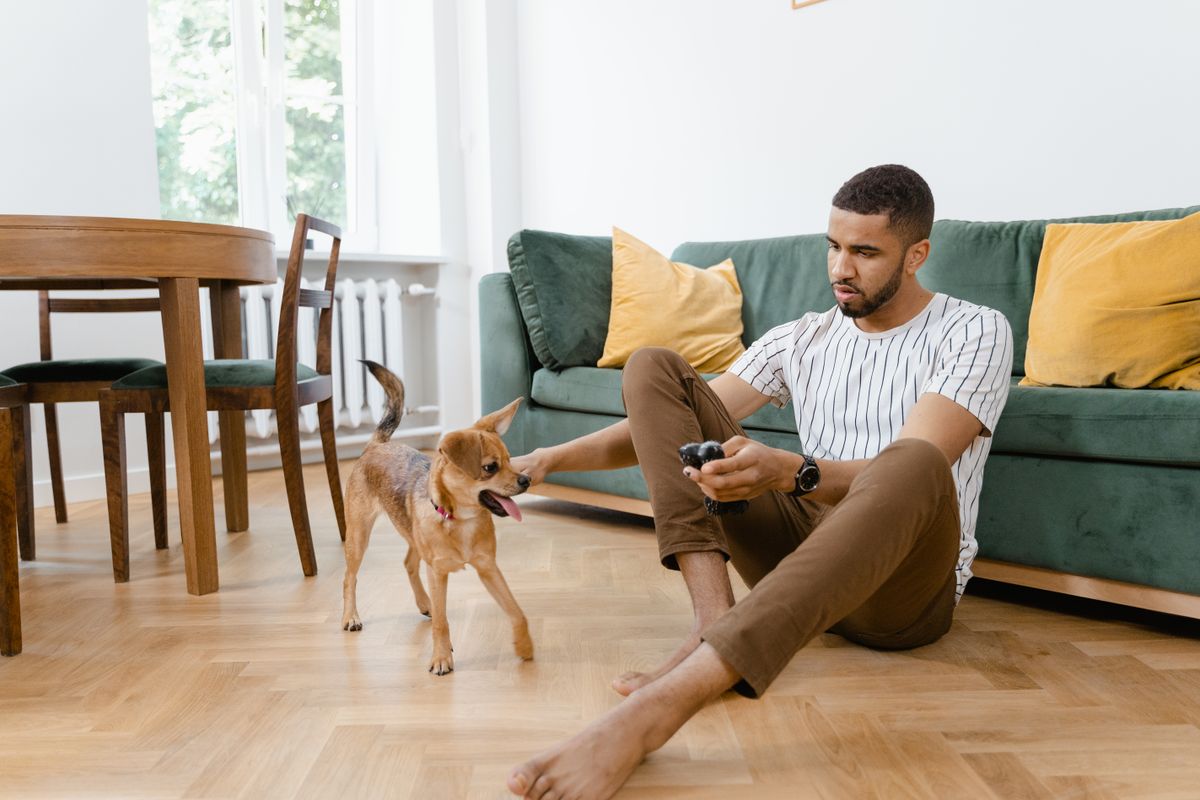
Do belly bands stop male dogs from marking?
No. A belly band can catch urine, but it does not remove the dog's reason for lifting his leg. VCA's marking article is direct on this point: belly bands can protect belongings, but they do not teach dogs to refrain from marking.
That answer can feel disappointing until you reframe the job. A band is not the teacher. It is the seat belt while the teacher works. The teaching is supervision, trigger control, cleaning, outdoor reinforcement, and professional guidance when the pattern is complex.
A dog diaper liner is an absorbent pad that attaches inside a band or diaper; PAWPANG makes a peel-and-stick version for owners who need the wet layer to stay in place during marking-risk windows.
Why would a dog mark even with a band on?
A dog may still mark with a band on because the behavior is driven by scent communication, hormones, habit, anxiety, frustration, or the presence of other dogs. The band changes the consequence for the room. It does not change the motivation inside the dog.
Merck Veterinary Manual describes scent marking as a central feature of canine social communication. The same source frames marking as a social signal and notes that it is common in unneutered males while still possible in females and neutered dogs.
This is why owners should avoid reading band use as failure. If the liner is wet after a guest arrives, that is data. The product protected the sofa, and the log now tells you guest arrival is a trigger.
What should a belly band be paired with?
Pair the band with a plan, not with hope. The plan should include a clean-up method, blocked access to repeat targets, more supervision during trigger windows, outdoor breaks before high-risk events, and calm interruption if you catch the posture.
| Pair the belly band with | Why it matters |
|---|---|
| Enzymatic cleaning | Reduces scent reminders at old targets |
| Gates or closed doors | Stops rehearsal at repeat spots |
| Trigger notes | Shows whether guests, windows, or other dogs matter |
| Outdoor reinforcement | Gives the dog an appropriate marking outlet |
| Vet check when sudden | Rules out physical causes of new urination |
The band is one line in the routine. The routine is what changes the household pattern. For a broader comparison of absorbent layers and covers, see PAWPANG's guide to waterproof covers, diapers, and liners.
Can neutering stop marking?
Neutering may reduce urine marking for some male dogs, but it is not a guaranteed switch. Merck's social behavior chapter reports decreases in roaming, mounting, and urine marking after castration in many dogs, while VCA's neutering article emphasizes that many factors influence behavior and that veterinarians can help with training and management decisions.
This is a veterinarian conversation, not a product article decision. Age, breed, health, behavior history, and household goals all matter. If your dog is intact and marking is new or intense, ask your vet what role hormones may play and what options fit your dog.
How often should I change the liner?
Change the liner as soon as it is wet. A band or diaper should never become a place where urine sits against the skin for convenience.
PAWPANG's dog diaper inserts are meant to make that change easier inside a washable garment. The owner still has to check. A good routine may include checking after greetings, after window barking, after naps, after visitors enter, and before the dog settles on furniture.
For marking routines, the useful detail is the trigger pattern: a wet liner after guests arrive, after window barking, or after the dog reaches one sofa corner tells the owner when protection and behavior work need to tighten. That comfort depends on timely changes, not on leaving the same wet layer in place.
Are belly bands safe for long workdays?
A belly band may be useful for a defined window, but it should not be treated as an all-day substitute for breaks, supervision, or care. If the dog is alone for many hours, the plan should include a walker, sitter, safe flooring, or a different management setup.

For a long day, think in checks. How long before the band becomes wet? Who will remove it? Is the dog also drinking more, urinating more, or having larger accidents? If no one can answer those questions, the setup needs adjustment.
What signs mean this is not simple marking?
Watch for sudden onset, straining, crying, blood, repeated attempts to urinate, large puddles, increased thirst, strong odor changes, or a dog who seems unable to control urine. VCA's house-soiling guidance lists many physical and behavioral reasons for indoor elimination, including illness, discomfort, anxiety, and age-related changes.
Surface protection is useful, but it should not hide a medical pattern. If the story changes quickly, talk to your vet.
What should I do the first time the band is wet?
Remove the wet liner, clean the dog if needed, clean the target area, and write down what happened right before the mark. Then reset the room so the dog cannot immediately repeat the same behavior at the same target.

If the same trigger repeats, act on the trigger. Close the curtain. Move the guest bag. Use a gate. Take the dog out before the exciting arrival. Keep the band for the vulnerable window, but do not let the band become the whole strategy.
FAQ
Should my dog wear a belly band while I am home?
It can help during supervised high-risk windows, especially around guests, window triggers, or repeat furniture targets.
Can PAWPANG replace a belly band?
No. PAWPANG is the absorbent liner, not the outer wrap. It belongs inside a suitable belly band or diaper.
Will a belly band make my dog lazy about house-training?
The band itself does not teach either direction. Your supervision, outdoor rewards, and prevention of repeat indoor marking shape the habit.
Do belly bands work for female dogs?
Belly bands are shaped for male anatomy. Female dogs usually need a different diaper style if coverage is required.
When should I stop using one?
Reduce use when the trigger plan is working, repeat targets are clean and blocked, and your dog can be supervised without marking. If urination changes persist, talk to your vet if this continues.