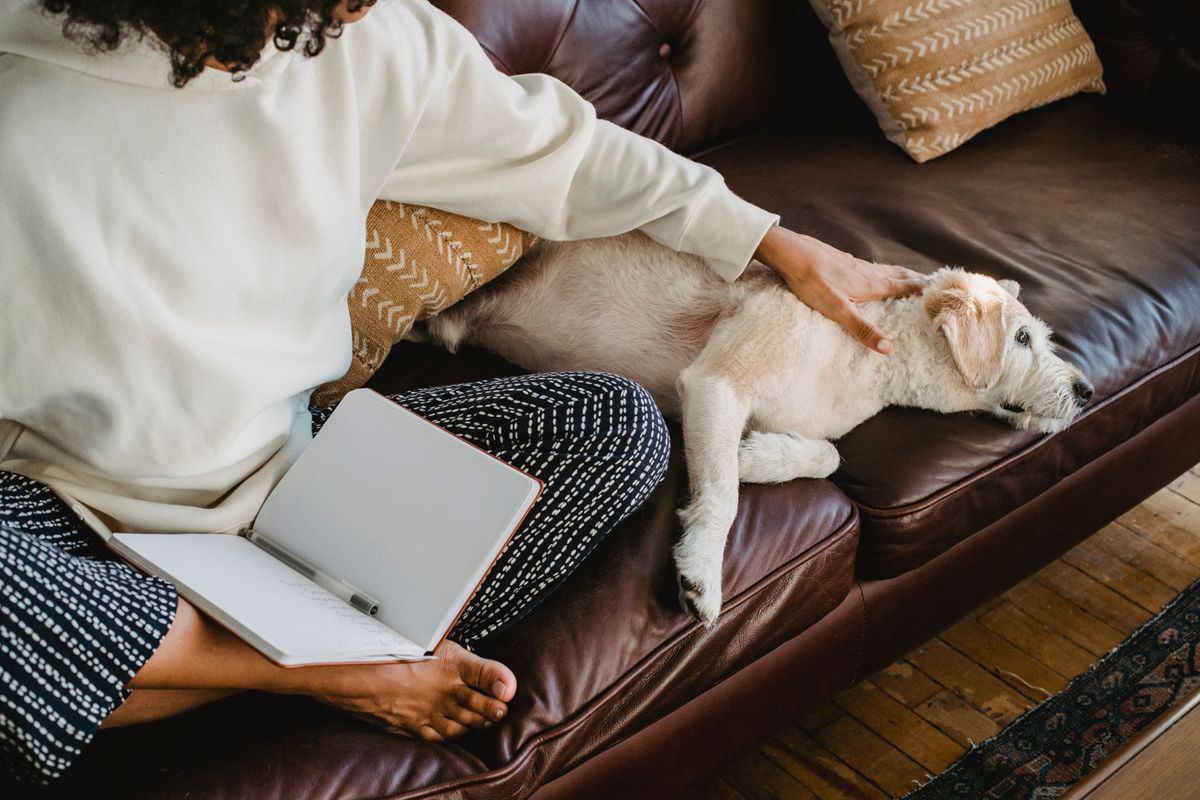

Can a wet dog diaper cause urine scald?

Yes, a wet dog diaper can contribute to urine scald when moisture stays against the skin for too long, especially around thin-haired areas near the belly, groin, vulva, or prepuce. A diaper or liner routine cannot replace veterinary care, but it can make moisture checks and changes easier before dampness turns into a daily skin problem.
The risk is not the diaper by itself. The risk comes from time, wetness, friction, and missed checks.
Aileen B., a verified PAWPANG customer, gave the practical version of that worry in her review. Her senior dog started having nighttime accidents after medication increased potty breaks, and she wrote that she was worried about "the moisture against her body overnight."
What is urine scald in dogs?
Urine scald is skin irritation that can happen when urine keeps contacting the coat and skin. The professional version of the MSD Veterinary Manual notes that incontinent animals may leave urine where they lie or dribble while walking, and that wet coat around the vulva or prepuce can lead to dermatitis from urine scalding.
A dog diaper liner is an absorbent pad that attaches inside a dog diaper, wrap, or belly band so the wet insert can be swapped out instead of changing the whole garment every time. PAWPANG makes dog diaper liners for this kind of hygiene routine, not as a medical treatment and not as a substitute for checking why the leakage is happening.
The simple owner-facing definition matters because many families use "diaper," "pad," and "liner" as if they mean the same thing. They do not. The diaper holds coverage in place. The liner is the replaceable absorbent layer.
Can damp bedding irritate a dog's skin?
Yes, damp bedding can keep the same moisture problem going even after the diaper is changed. If a dog lies back down on a wet blanket, the skin is still being exposed to urine and humidity.
That is why the check should include three places: the liner or diaper, the fur around the contact area, and the bedding under the dog. A clean liner inside a damp bed is a half-finished reset.
For a dog who sleeps deeply, the first wet spot may be under the hips rather than inside the diaper. Many owners notice it only in the morning, when the blanket has a urine smell and the fur feels slightly tacky. At that point, the routine needs a tighter check window.
How long is too long for a dog to stay in a wet diaper?
There is no universal safe hour count because the answer depends on urine volume, coat thickness, skin condition, fit, movement, and whether the dog is sleeping or walking. A better rule is to check by condition: if the liner is wet, heavy, folded, or touching the skin, change it.
For overnight care, set one planned check before bed and one early-morning check. If the liner is soaked at either point, shorten the window next time. For a fuller night setup, see PAWPANG's guide to a senior dog diaper overnight check routine.
| What you find | What it means for the routine | What to do next |
|---|---|---|
| Liner is lightly damp | The window may be workable | Swap the liner and check fur |
| Liner is heavy or bunched | Moisture may be staying against skin | Change sooner and check fit |
| Fur is wet after a change | The diaper or bedding may be saturated | Clean and dry the area, then reset bedding |
| Redness, odor, licking, or discomfort | This is no longer just a laundry issue | Talk to your vet |
This table is a routine guide, not a medical test. Skin that looks irritated deserves a professional look.
Why do senior dogs get skin irritation faster?
Senior dogs can spend longer periods lying down, and that can make moisture contact more concentrated. Reduced mobility also means a dog may not shift position enough to let warm, damp areas air out.
MSD describes urinary incontinence as unconscious or intermittent urine passage, including pools where an animal has been lying or dribbling while walking. That pattern fits what many senior-dog families see: the dog is not misbehaving, and the owner may not notice until the bed or diaper is already wet.
This is where a routine matters more than blame. A senior dog who naps for four hours may need a different system than a young dog who alerts at the door.
What should you check after removing a wet dog diaper?
Check the skin, the fur, the fit marks, and the smell before putting on a fresh diaper. The fastest change is not always the cleanest reset.
Start with the contact zones. Look where the diaper edge sits, where the liner touched, and where urine may have pooled. The skin should not look increasingly red, sticky, broken, or painful. The fur should not stay damp after a quick towel dry.
Then check the diaper itself. If the liner shifted, folded, or left the absorbent area, the next change will fail in the same way unless the fit is corrected. PAWPANG's dog diaper liners use adhesive strips to help the liner stay inside the diaper, wrap, or belly band during ordinary movement.
How can a liner help without making medical claims?
A liner can help the care routine because it gives the wet absorbent layer a clear place to go and a clear time to be replaced. It does not treat urine scald, stop incontinence, or remove the need for veterinary care.
For families already using washable diapers, the practical advantage is speed. Instead of removing the whole diaper setup every time there is a small leak, you can swap the saturated dog diaper insert and check the skin while the outer diaper stays available if it is still clean.
PAWPANG fits this routine as a hygiene tool: the liner sticks inside the diaper, absorbs the accident, and gives the owner a visible moisture checkpoint. The value is not magic. It is a more consistent change habit.
When should a wet diaper problem become a vet question?
Call your vet if you see redness that does not settle, broken skin, a strong odor from the skin, pain, repeated licking, blood in urine, straining, or sudden changes in urination. Those signs are outside a product routine.
Cornell University's Riney Canine Health Center lists common UTI signs such as straining to urinate, frequent small amounts of urination, accidents in the house, foul-smelling urine, excessive genital licking, and blood in urine. Those are reasons to investigate health, not reasons to keep adjusting the diaper alone.
The safest way to use a dog diaper is to treat it as management for mess and comfort while staying alert to the dog's body. If the pattern changes, the plan changes.
What daily routine lowers moisture time?
Use a simple repeatable loop: check, swap, dry, air, and record. A routine you can follow on a tired morning beats a perfect plan you abandon after two days.
For example:
1. Check the diaper or liner at wake-up, midday, evening, and before bed.
1. Swap the wet layer right away.
1. Pat fur dry before replacing the diaper.
1. Give the skin short diaper-free breaks when safe for the room.
1. Write down any redness, odor, licking, or sudden increase in accidents.
That last step matters. A written note helps you see whether this is improving, staying the same, or becoming a vet appointment.
FAQ
Can a wet dog diaper cause urine scald?
Yes, it can contribute when urine and damp fabric stay against the skin for too long. The risk is moisture contact over time, not the diaper alone.
Are dog diaper liners better than changing the whole diaper?
They are different tools. A liner can make frequent wet-layer changes easier, while the full diaper still needs washing or replacing whenever it is dirty, damp, or rubbing.
Can PAWPANG liners prevent urine scald?
No product should be framed as preventing a skin condition. PAWPANG liners can support a cleaner change routine by giving owners a replaceable absorbent layer inside the diaper.
What should I do if my dog's skin is already red?
Stop treating it as a laundry problem. Keep the area clean and dry, avoid trapping moisture again, and talk to your vet if redness, odor, licking, pain, or broken skin continues.