

Is excitement urination the same as urine marking in dogs?

No. Excitement urination is an involuntary small release during a highly stimulating moment, while urine marking is a scent signal placed in a meaningful location. They can look similar on the floor, so watch the timing, posture, target, and amount before choosing a management plan.
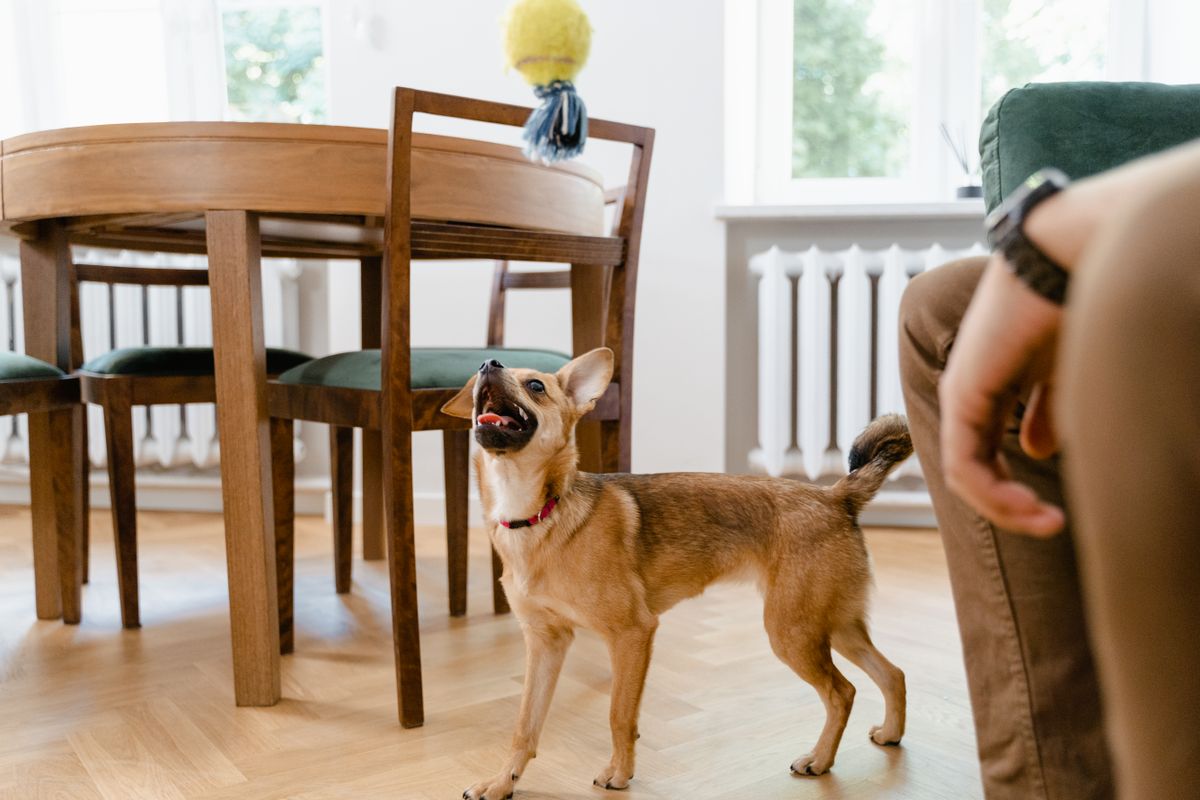
Excitement urination is a small urine release that happens while a dog is active and excited rather than afraid.
What does excitement urination look like?
Excitement urination usually appears during greetings, vigorous play, or intense attention, often while the dog is standing or moving. The UC Davis School of Veterinary Medicine notes that submissive signals are absent in excitement urination and that it occurs more often in puppies.
Picture the front door opening. A puppy wiggles, spins, and approaches, then leaves a small wet patch without deliberately stopping to choose a target. The emotional peak and the urine release happen together.
What does urine marking look like?
Urine marking usually looks more deliberate in location, with a small amount placed on an object or previously scented area. The Merck Veterinary Manual defines marking as elimination used to send a social signal and describes the common leg-lift posture on objects.
A dog may pause to investigate a table leg, suitcase, doorway, plant, or spot another animal marked. Merck describes a leg lift toward an object as a common marking posture; females and neutered dogs can mark too, so sex alone cannot settle the question. In a verified PAWPANG review, Kent described a male Shih Tzu who “marked EVERYWHERE,” a household detail that fits this object-directed pattern without proving its cause.
| Clue | Excitement urination | Urine marking |
|---|---|---|
| Typical moment | Greeting or active play | Scent investigation or environmental change |
| Body movement | Wiggling, walking, spinning | Pause, sniff, leg lift or directed posture |
| Target | Floor beneath the dog | Object, edge, vertical surface, known scent spot |
| Amount | Often small; amount alone does not separate them | Often small; amount alone does not separate them |
| Observable sequence | Release while moving or greeting | Sniff, pause, then direct urine toward a target |
Can submissive urination be mistaken for both?
Yes. Submissive urination can also leave a small patch during a social interaction, but the body language is different. Look for a lowered body, tucked tail, ears back, avoidance of eye contact, cowering, or rolling over.
Do not label every greeting accident as excitement. A dog who looks worried needs a lower-pressure interaction. Scolding, looming, direct staring, or physical correction can increase fear and make the event harder for the dog.
How should a calm greeting be practiced?
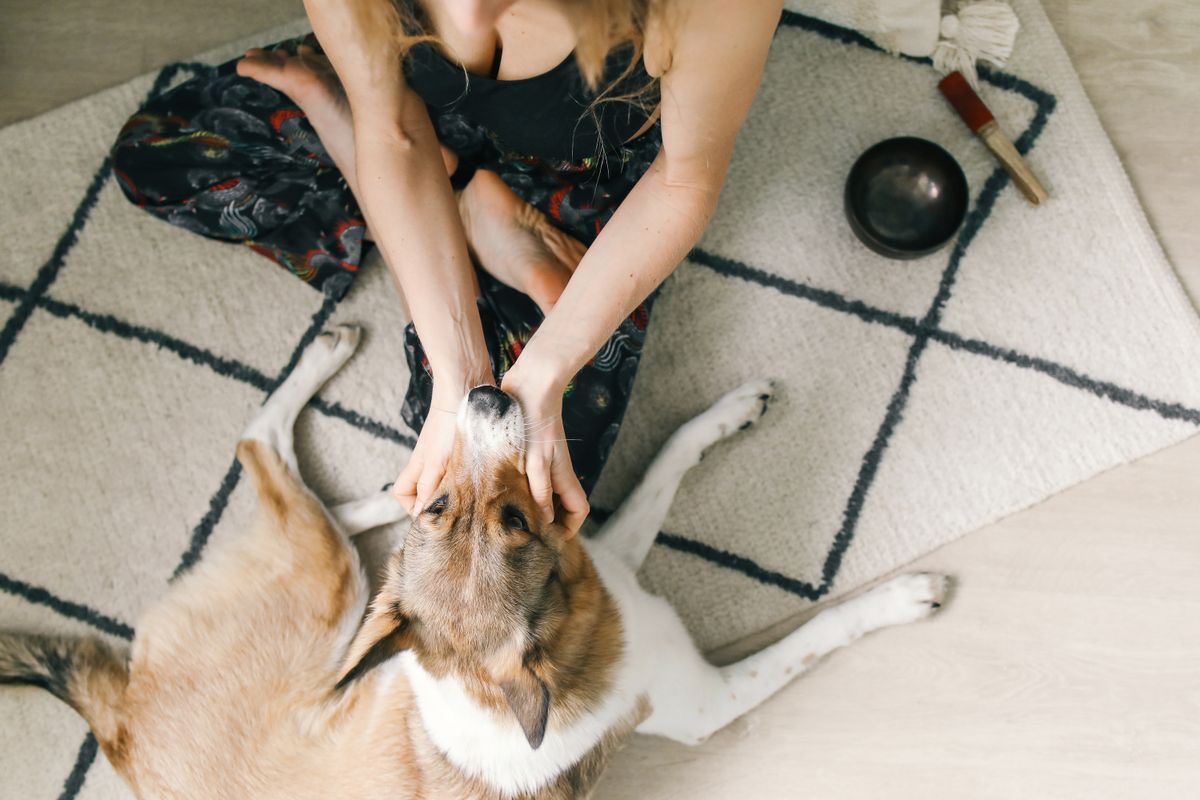
A calm greeting should lower the intensity before contact begins. Enter quietly, avoid leaning over the dog, keep voices low, and let the first burst of energy pass before offering attention.
Reward four paws on the floor, a mat settle, or another easy behavior your dog already understands. Practice briefly and often. Positive reinforcement gives the dog a predictable action without making the accident the center of the greeting.
If visitors are the trigger, explain the routine before they enter. The person can turn slightly sideways, avoid direct eye contact, and wait before petting. If excitement rises again, pause instead of correcting.
How should indoor marking be managed differently?
Indoor marking management should focus on target access, residual odor, triggers, supervision, and appropriate outdoor opportunities. Clean the area thoroughly, block repeated targets when unsupervised, and redirect calmly before the posture begins.
Keep a short log of where and when marks occur. A dog who marks beside a window after seeing another dog needs a different setup from a puppy who leaks only during greetings. Our seven-day marking tracker provides a simple observation framework.
Where does temporary moisture protection fit?
Temporary moisture protection fits after you have separated management from behavior change. A belly band or reusable cover may protect flooring and furniture, but the dog can still urinate inside it, so it must be checked and changed promptly.
A dog diaper liner is a replaceable absorbent insert for a compatible cover or belly band. PAWPANG's dog diaper liners add that replaceable layer inside a compatible cover. They are useful for cleanup during greetings or supervised marking management, not as proof that one behavior or the other is occurring.

What details should you bring to a veterinarian?
Bring the dog's age, when the pattern began, the exact situations, posture, amount, frequency, and any changes in thirst or general behavior. A short video can help if it can be captured without staging or stressing the dog.
Medical issues, incomplete housetraining, separation-related distress, marking, and emotional urination can overlap in a household description. A veterinarian can rule out medical contributors and direct you to qualified behavior support when appropriate.
When is a small accident urgent rather than behavioral?
A small accident is not safely dismissed as behavioral when a dog strains, seems painful, cannot pass urine normally, urinates much more often, or changes suddenly after reliable housetraining. Those signs require timely veterinary guidance.
Do not wait for a clearer pattern if your dog is uncomfortable. Talk to your vet if accidents continue, change abruptly, or come with changes in drinking, appetite, energy, or sleep.
During ordinary observation, keep the categories separate on paper. Write "greeting, walking, small patch" for one event and "sniffed table leg, paused, leg lifted, drops" for another. Descriptions like these are more useful than deciding too early that a dog is excited, submissive, territorial, or stubborn. They also let every family member follow the same calm routine.
Review the notes after several events rather than after every wet spot. One incident can be ambiguous. Repeated timing and posture provide stronger context, while a sudden health or comfort concern always moves the next step to the veterinarian.
FAQ
Does excitement urination mean my dog is not housetrained?
Not necessarily. It can happen in a dog who otherwise uses the correct toilet area because the release is tied to an intense greeting or play moment.
Is urine marking always territorial?
No. Marking is scent communication, and triggers can include new objects, social changes, unfamiliar animals, or other environmental events. Avoid reducing it to dominance.
Should I punish a dog for either behavior?
No. Punishment can increase fear, confusion, or hidden marking. Calm management and reward-based practice are safer starting points.
Can PAWPANG liners stop excitement urination?
No. PAWPANG liners manage moisture inside a compatible cover; they do not stop the emotional or behavioral event. Use them as temporary protection while working on the appropriate routine.